Cyber Toolkit Ltd, a UK Registered Company - 16938415
This is the Cyber Toolkit weekly roundup of key cyber security news, covering the most relevant vulnerabilities, breaches and incidents affecting organisations in the UK and beyond over the past week (23rd June - 30th June 2026).
A number of significant security incidents highlighted the growing impact cyber attacks can have on national infrastructure. In Brazil, attackers hijacked the country's national emergency alert system, sending fraudulent messages directly to citizens. While the technical details remain under investigation, the incident demonstrates how systems designed to provide public safety can become attractive targets if compromised. As governments continue to digitise critical services, protecting these trusted communication channels is becoming increasingly important.
Cisco warned that attackers are now actively exploiting a recently disclosed vulnerability affecting Unified Communications Manager and SME deployments. The flaw allows unauthenticated remote code execution, meaning organisations running vulnerable systems should prioritise applying the available security updates. The development serves as another reminder that the window between vulnerability disclosure and active exploitation continues to shrink, making timely patch management essential.
Healthcare remained firmly in the spotlight after health technology provider Xsolis disclosed a data breach affecting approximately 1.4 million individuals. The incident exposed personal and health-related information held by the organisation, once again highlighting the attractiveness of healthcare providers and their suppliers to cyber criminals. The sector continues to face sustained pressure from attackers seeking to monetise sensitive personal data through extortion, fraud or identity theft.
Researchers also drew attention to the growing scale of automated attacks against internet-facing infrastructure through the so-called "FortiBleed" campaign. The activity demonstrated how threat actors are rapidly scanning for vulnerable systems and exploiting exposed services at scale, often within hours of new vulnerabilities becoming public. The campaign reinforces the importance of reducing external attack surfaces, implementing continuous monitoring and ensuring security updates are deployed as quickly as possible.
The UK's National Cyber Security Centre published new guidance examining how artificial intelligence is reshaping cyber risk for organisations. While AI offers significant opportunities to improve defensive capabilities, it is also enabling attackers to develop more convincing phishing campaigns and increase the speed of attacks. The guidance encourages organisational leaders to treat AI as both an opportunity and an emerging risk that requires appropriate governance and security planning.
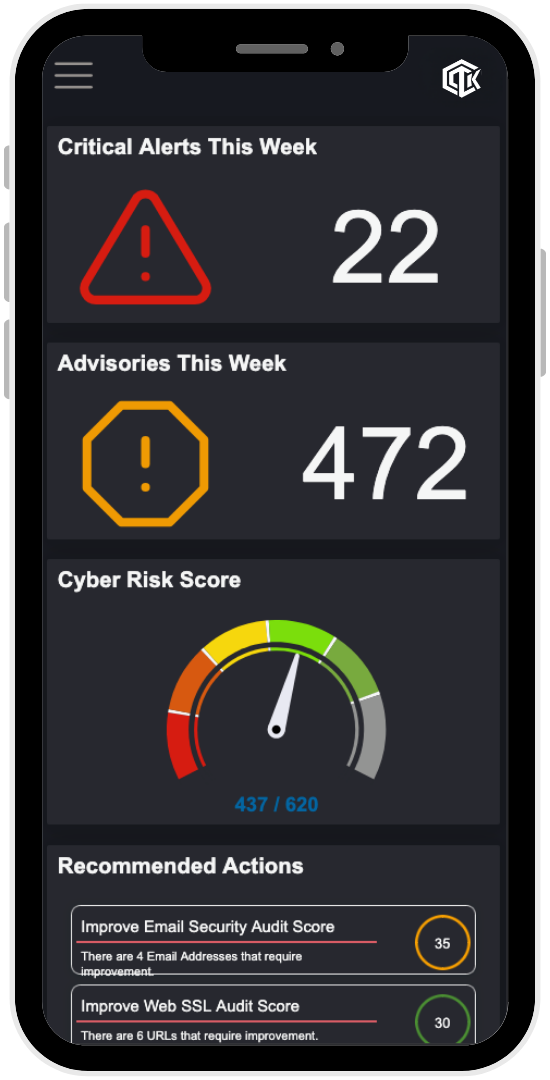
This week, Cyber Toolkit demonstrated its pivotal role by issuing 472 technical alerts, enabling organisations to stay ahead of emerging threats and respond promptly. Furthermore, our system identified 22 critical vulnerabilities across various systems. These figures highlight the importance of proactive measures and as cyber threats continue to evolve, it is crucial for organisations to stay vigilant and utilise effective and FREE tools like Cyber Toolkit to manage their cyber security risks.
We'll see what next week brings.